

Businesses now use cloud systems for almost everything. Companies store files online, manage customers through cloud software, run websites, and support remote teams using internet-based platforms. While cloud technology improves flexibility and productivity, it also creates security challenges.
Hackers constantly target cloud systems to steal data, spread malware, or damage business operations. That is why cloud security management has become one of the most important parts of modern business protection.
Cloud security management helps businesses organize, monitor, and improve the security of cloud systems and online data. It combines tools, policies, employee training, and security monitoring to reduce cyber risks.
Today, both small businesses and large companies rely on cloud security systems to protect customer information, financial records, and daily operations.
The good news is that modern cloud security tools now offer strong protection for businesses of all sizes. In this guide, you will learn what cloud security management is, how it works, common threats, key security methods, business benefits, challenges, and best practices for keeping cloud systems safe.
What Is Cloud Security Management?
Cloud security management means managing and protecting cloud-based systems, networks, applications, and data from cyber threats and unauthorized access.
Businesses use cloud platforms for:
- File storage
- Online meetings
- Business software
- Customer management
- Financial systems
- Team collaboration
Cloud security management helps secure all these systems.
Security management usually includes:
- User access control
- Password management
- Threat monitoring
- Security updates
- Data protection
- Backup systems
For example, a business using cloud accounting software must protect customer payment information from hackers and unauthorized users.
Cloud security management also helps businesses:
- Detect suspicious activity
- Prevent attacks
- Follow privacy laws
- Reduce security risks
The goal is keeping cloud environments safe while allowing employees to work efficiently online.
As cloud technology grows, businesses must manage security more carefully than ever before.
Why Cloud Security Management Matters
Modern businesses depend heavily on online systems. That is why strong cloud security management is very important.
Cyberattacks Continue Growing
Hackers use:
- Malware
- Ransomware
- Phishing emails
- Fake login pages
to target cloud systems.
Businesses Store Sensitive Information
Cloud platforms often contain:
- Customer records
- Financial data
- Employee files
- Business documents
A security breach may create serious financial and legal problems.
Remote Work Increased Risks
Employees now access cloud systems from:
- Homes
- Mobile devices
- Public Wi-Fi
- Different countries
This creates additional security challenges.
Downtime Hurts Businesses
Cyberattacks may stop:
- Websites
- Online payments
- Customer support
- Internal communication
For example, an online business losing access to customer data during a cyberattack may lose money and customer trust quickly.
Strong cloud security management helps businesses stay safer and more stable online.
How Cloud Security Management Works
Understanding how cloud security management works helps businesses improve protection more effectively.
Cloud security management combines several security layers together.
Access Management
Businesses control who can:
- View files
- Edit data
- Use applications
- Access systems
Authentication Systems
Authentication verifies user identity through:
- Passwords
- Security codes
- Multi-factor authentication
- Fingerprint login
Threat Monitoring
Security tools monitor cloud systems continuously for suspicious behavior.
Security Updates
Regular updates fix security weaknesses and improve protection.
Backup and Recovery
Cloud backups help businesses recover after:
- Cyberattacks
- Hardware failures
- Human mistakes
For example, if someone tries logging into a business account from an unusual country, monitoring systems may block the login automatically.
Modern cloud security management uses automation and continuous monitoring to improve online safety.
Common Threats in Cloud Security Management
Businesses face many cyber risks today. Understanding these dangers improves cloud security management planning.
Phishing Attacks
Hackers send fake emails to steal passwords or sensitive information.
Malware
Malicious software may damage cloud systems or steal data.
Ransomware
Hackers lock business files and demand payment for recovery.
Weak Passwords
Simple passwords remain one of the biggest security problems.
Insider Threats
Employees may accidentally or intentionally expose business data.
Data Breaches
Unauthorized users may gain access to private information.
For example, an employee clicking a fake login page may unknowingly give hackers access to company cloud systems.
Cyber threats continue changing, which is why businesses must update security strategies regularly.
Types of Cloud Security Management Solutions
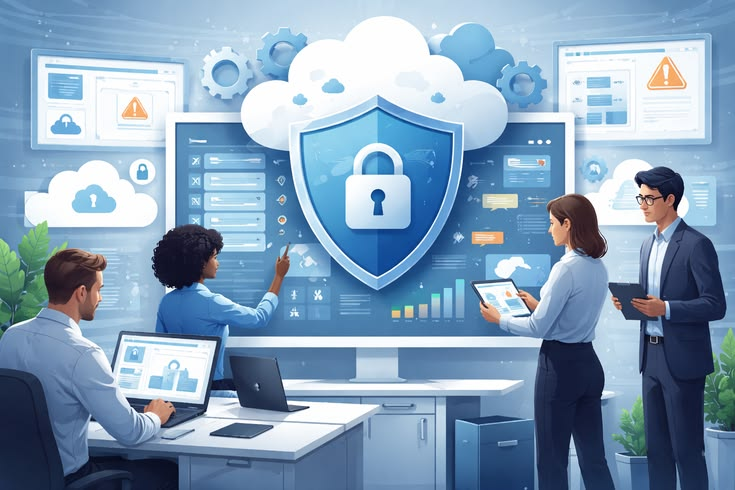
Different companies use different cloud security management tools depending on their needs and risk levels.
Identity and Access Management (IAM)
IAM systems control user access and permissions.
Multi-Factor Authentication (MFA)
MFA adds extra login security beyond passwords.
Cloud Firewalls
Firewalls block suspicious internet traffic.
Security Monitoring Platforms
Monitoring systems detect unusual behavior and threats.
Encryption Tools
Encryption protects data during storage and transfer.
Backup and Recovery Systems
Backup systems help recover lost or damaged files.
For example, a healthcare company may combine encryption, monitoring, and access controls to protect patient records safely.
Most businesses use several security systems together for stronger protection.
Benefits of Cloud Security Management
Strong cloud security management provides many important advantages for businesses.
Better Data Protection
Sensitive information stays safer from hackers and cybercriminals.
Reduced Financial Risks
Cyberattacks often create expensive recovery costs and downtime.
Improved Customer Trust
Customers feel safer using businesses with strong security systems.
Better Remote Work Protection
Employees can access systems more safely from different locations.
Faster Threat Detection
Modern monitoring systems identify suspicious activity quickly.
Improved Business Continuity
Backup systems help businesses continue operating after cyber incidents.
For example, a company with strong cloud monitoring may stop suspicious login attempts before hackers steal data.
Good security management protects both business operations and company reputation.
Cloud Security Management for Small Businesses
Small businesses often believe cybercriminals only target large corporations. But smaller companies face many online risks too.
That is why affordable cloud security management systems matter greatly for small businesses.
Small Businesses Often Have Limited IT Teams
Cloud security services help smaller companies improve protection more easily.
Affordable Security Tools Exist
Many cloud providers offer:
- Encryption
- Threat monitoring
- Secure backups
- Multi-factor authentication
Customer Trust Matters
One security problem may damage a small business badly.
Online Businesses Face Constant Risks
Even small online stores and websites attract hackers.
For example, a small online business losing customer payment data may struggle to recover customer confidence.
Cloud security management helps small businesses operate more safely and professionally.
Best Practices for Cloud Security Management
Good habits greatly improve cloud security management effectiveness.
Use Strong Passwords
Passwords should:
- Be long
- Include numbers and symbols
- Avoid simple words
Enable Multi-Factor Authentication
Extra verification steps improve account security greatly.
Train Employees
Employees should learn:
- Email safety
- Phishing awareness
- Password protection
- Safe browsing habits
Update Software Regularly
Old software often contains security weaknesses.
Limit User Access
Only authorized users should access sensitive systems.
Monitor Cloud Systems Continuously
Regular monitoring helps detect threats early.
For example, businesses should teach employees never to open suspicious email attachments from unknown senders.
Simple security habits prevent many cyber problems.
Challenges in Cloud Security Management
Although cloud security management improves safety greatly, businesses still face several challenges.
Human Error
Employees may:
- Click dangerous links
- Use weak passwords
- Share sensitive information carelessly
Growing Cyber Threats
Hackers constantly develop new attack methods.
Remote Work Risks
More devices and internet connections increase security exposure.
Compliance Requirements
Some industries must follow strict privacy laws.
Shared Responsibility Confusion
Some businesses incorrectly assume cloud providers handle all security automatically.
For example, employees using public Wi-Fi without VPN protection may accidentally expose company data.
Understanding these challenges helps businesses improve cloud security planning.
Cloud Security Management and Compliance
Many industries must follow strict privacy and security laws. That is why cloud security management also supports compliance.
Businesses Must Protect Customer Data
Companies often handle:
- Payment information
- Medical records
- Employee details
- Personal customer data
Security Policies Matter
Businesses should create clear rules for:
- Password use
- File sharing
- Remote access
- Device security
Regular Security Audits Help
Audits identify weaknesses before hackers exploit them.
For example, healthcare businesses must follow strict patient privacy regulations while storing records in cloud systems.
Good security management helps businesses avoid legal problems and improve customer trust.
Future of Cloud Security Management
The future of cloud security management continues evolving as technology improves.
Artificial Intelligence Security Tools
AI systems now help:
- Detect suspicious activity
- Predict cyber threats
- Automate security responses
Zero Trust Security Models
Businesses increasingly verify every device and user continuously.
Better Remote Work Security
Security systems continue improving for hybrid work environments.
Faster Threat Detection
Modern tools identify attacks more quickly than before.
Smarter Automation
Future cloud systems may automatically isolate infected devices during attacks.
For example, AI-powered security systems may recognize suspicious employee login behavior instantly and block unauthorized access automatically.
Cloud security management will likely remain one of the most important business technology investments for years ahead.
How to Choose the Right Cloud Security Management Solution
Choosing the best cloud security management system depends on business size, industry, and security needs.
Identify Business Risks First
Ask:
- What systems need protection?
- Which data is most sensitive?
- How many users access cloud systems?
Choose Trusted Providers
Look for providers with:
- Strong security history
- Reliable customer support
- Good reviews
- Regular updates
Check Important Features
Good systems often include:
- Encryption
- Monitoring
- Backup systems
- Access controls
- MFA support
Consider Future Growth
Security systems should support business expansion easily.
Test Recovery Systems
Businesses should confirm backup and recovery tools work properly during emergencies.
For example, financial companies may focus heavily on payment protection, while schools may prioritize student privacy systems.
Smart planning helps businesses choose stronger long-term security systems.
FAQs About Cloud Security Management
A quick guide to common questions businesses ask about cloud security management.
1. What is cloud security management?
Cloud security management protects cloud systems, applications, networks, and data from cyber threats and unauthorized access.
2. Why is cloud security management important?
It helps protect sensitive business information, customer data, and online operations from cyberattacks.
3. What is multi-factor authentication?
Multi-factor authentication adds extra login verification beyond passwords for stronger account security.
4. Can small businesses use cloud security management tools?
Yes, many affordable cloud security services work well for small businesses and startups.
5. Are cloud systems completely safe?
No system is perfectly safe, but strong security management greatly reduces cyber risks.
Conclusion
Cloud security management plays a major role in protecting modern businesses from cyber threats, data leaks, and online attacks. As more companies move systems and operations online, strong cloud security becomes more important every year.
Good security management helps businesses protect customer information, support remote work, reduce financial risks, and improve business stability. Monitoring systems, encryption, employee training, backups, and strong passwords all help improve online safety.
Although cyber threats continue growing, businesses can greatly reduce risks through smart planning, continuous monitoring, and strong security habits. Companies that invest in cloud security management often build safer and more reliable digital operations for long-term success.
As cloud technology continues expanding worldwide, managing cloud security properly will remain essential for every modern business.