
Choosing a side in a La Liga match becomes less guesswork and more structured decision-making when you treat each coach’s tactical identity as a repeatable pattern instead of a vague narrative. The 2012/13 season, with Barcelona’s dominance and a spread of contrasting styles beneath them, offers an excellent case study in how shapes, pressing intensity, and risk profiles translate into concrete pre‑match edges. By learning to decode what each coach was trying to achieve with and without the ball, you can turn tactical knowledge into a filter for when odds align—or clash—with the likely game script.wikipedia+1
Why Coach Tactical Profiles Matter More Than Club Names
Coaches leave clearer fingerprints on match dynamics than club brands because they decide how aggressively to press, how many players to commit forward, and how much risk to accept when protecting a lead. In La Liga 2012/13, the same badge could represent very different football depending on who was on the touchline, with some managers prioritizing compact defending and others pushing high lines and heavy possession. Treating “Barcelona” or “Osasuna” as static entities ignores the reality that tactical choices, not just squad quality, dictate shot volumes, territory, and tempo.jhk.termedia+1
From a pre‑match betting angle, knowing a coach’s tendencies creates a cause–effect chain that runs from tactical setup to likely statistical profile to value or mispricing. A manager who consistently sets his side up to invite pressure and counter quickly will tend to produce matches with specific rhythm: low possession, sudden transitions, and volatility in expected goals. Those patterns help you anticipate where the market might be underweight or overweight on outcomes such as unders, both teams to score, or handicap lines before you even look at the prices.
How La Liga 2012/13 Set the Tactical Landscape
The 2012/13 La Liga season combined an exceptional top-end possession juggernaut with a cluster of teams experimenting with more direct or hybrid approaches to stay competitive. Barcelona, under Tito Vilanova, accumulated 100 points with a game model still rooted in positional play, short passing, and relentless territorial control, while other clubs navigated between matching that associative style and leaning into compact defensive blocks and counter-attacks. This tension between control and containment shaped the way matches looked, especially when mid-table sides went away to Camp Nou or the Bernabéu and made pragmatic choices.reddit+2
At the same time, tactical evolution in La Liga over that period saw a broader shift toward longer passing sequences and more structured possession, even among non-elite teams, though direct attacks and transitions remained an important weapon. For bettors, the key impact was that not all “defensive” coaches abandoned the ball entirely; some preferred controlled circulation that reduced chaos and lowered total shot counts. Understanding where each coach sat on the spectrum from deep block to proactive press allowed you to anticipate whether a fixture would likely become a stretched, chance-heavy contest or a slower, chess-like game.termedia+1
Key Tactical Dimensions to Read Before Choosing a Side
Before committing to a side, you can break coach tendencies into a small set of tactical dimensions that have clear betting implications. The first is defensive height and compactness: does the coach hold a high line and squeeze play, or drop into a low block and prioritize protecting the box? High lines often increase the risk of big chances on both sides, while low blocks can suppress shot quality but create specific counter windows. The second dimension is possession intent: is the team seeking to dominate the ball or simply use it efficiently when they have it, accepting long stretches without it?
A third dimension is pressing strategy—whether the side presses high, uses mid-block traps, or retreats quickly after losing the ball. High pressing increases tempo and typically generates more turnovers in dangerous areas, which tends to correlate with higher expected goals and volatility in match state. Finally, offensive structure matters: some managers prefer wide overloads and crosses, others aim for central combinations, and some focus on set pieces. Each of these choices affects where chances come from and how sustainable a team’s scoring output is across a season, which in turn shapes how you should treat them against different opponents.scribd+2
Using Tactical Matchups as a Pre‑Match Filter
Tactical matchups—how one coach’s plan interacts with another’s—often matter more than either game plan in isolation when deciding which side to back. A possession-focused coach who wants to push fullbacks high can be punished severely by a counter-attacking opponent with pace if his rest-defense structure is weak, leading to matches where the underdog’s chance quality exceeds its possession share. In contrast, the same possession coach might suffocate a deep-block opponent with limited transition threat, creating comfortable wins even if the market already respects his side.
To formalize this, you can treat each coach’s style as a profile and mentally simulate the likely game script. If both managers favour cautious, compact setups, you expect a congestion of play in midfield, longer sequences in non-threatening zones, and fewer clear chances, which pushes you towards unders or dog-with-handicap positions rather than high-goal expectations. If one coach is historically aggressive while the other is reactive, the balance of territory and transitions becomes more skewed, and it may make more sense to back the proactive side at home or look for spots where the reactive side has historically exploited that matchup pattern successfully.
Mechanisms That Turn Tactical Reading into Edge
Turning tactical reading into actual edge requires you to connect specific coaching habits to measurable outcomes that books must price. One mechanism is consistency: if a manager has used similar formations and pressing schemes over many matches, his games will produce more stable distributions of xG, shots, and possession, making it easier to predict ranges of outcomes. Another mechanism is context sensitivity: some coaches adapt strongly to opponent strength, playing expansive football at home to weaker teams and adopting conservative plans away to stronger sides, which produces predictable shifts in total chance creation and goal expectation.
A second mechanism involves how tactical structures respond to game state. Certain managers push fullbacks even higher when chasing the game, leading to explosive second halves with open transitions, while others prefer controlled risk and incremental changes. If data from 2012/13 shows that a particular coach’s teams tended to generate more shots and concede more counters when behind, you can anticipate increased volatility whenever they enter a match where falling behind early is plausible. These mechanisms create cause–effect links that you can systematically exploit by aligning your bets with scenarios that amplify or dampen those tendencies, rather than assuming every match is tactically neutral.jhk.termedia+1
Conditional Scenarios Where Tactical Logic Overrides Raw Form
There are situations where the tactical logic of the matchup should carry more weight than headline form lines when you choose a side. When a well-organized, compact team on a poor run faces a “gung-ho” attacking side whose defense is exposed in transition, the tactical script may still favour the out-of-form underdog because their strengths align with clear counter-attacking opportunities. In those cases, clean-sheet potential and high-quality fast-break chances should matter more to you than a simple “WDL” string from recent results.
Conversely, a team on a strong winning streak built on narrow margins and overperformance in finishing may be tactically vulnerable against an opponent whose pressing intensity and movement directly target their buildup weaknesses. If repeated footage shows that the in-form side struggles against high-pressure midfields, a fixture against a coach known for orchestrating aggressive pressing should raise doubts about following momentum blindly. Under these conditional scenarios, tactical fit becomes the decisive factor that either supports or contradicts what surface-level form appears to suggest.
Integrating Tactical Reads with Odds and UFABET Markets
Once you have a clear tactical picture, the next step is mapping that understanding onto the prices you see on the coupon instead of treating tactics and odds as separate worlds. If your read of a 2012/13-style matchup suggests low tempo, structured defending, and minimal transition threat, but the market posts aggressive goal lines as if both sides were wide-open, you have a direct signal that the tactical narrative disagrees with the implied probabilities. In contrast, when the odds already assume a tight contest, your edge may be minimal unless you have evidence of a specific weakness or matchup advantage that is not broadly recognized.
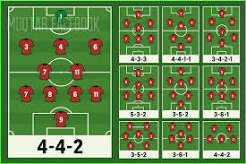
Under conditions where you are comparing multiple operators or tracking line movement, you may also observe that some providers adjust faster than others to information about team setups announced through lineups and press conferences. In this context, one way to operationalize your knowledge is to examine how a sports betting service like ufabet responds when coaches announce tactical shifts—such as moving from a double pivot to a single pivot or from a back four to a back three—and whether those adjustments lead or lag broader market corrections. The timing and magnitude of those shifts can either validate your pre‑match reading or signal that your edge has already been priced in.
Where Tactical Reading Fails or Misleads
Even sharp tactical reading can fail when you underestimate how much randomness and human factors still drive football outcomes. Red cards, early injuries, and freak set-piece goals can blow up the game script, forcing coaches to abandon their original plan and making your pre‑match assumptions obsolete within minutes. In those cases, a strategy heavily reliant on pre‑match tactical logic will inevitably experience sequences of unexpected results that are not errors in thinking but consequences of variance.
Another source of failure lies in overfitting historical patterns to new realities. Tactics evolve, and even within the 2012/13 season, some managers adjusted shapes and responsibilities as they learned more about their squads and opponents. If you treat early-season data as a permanent descriptor of a coach, you may miss later shifts toward more proactive or more defensive football that change the expected profile of chances and goals. To avoid being misled, you need to refresh your tactical priors regularly, cross-checking them against recent performance and public information rather than assuming that a manager’s historical identity is fixed.scribd+1
How casino online Context Shapes Practical Decision-Making
Beyond pure analysis, the context in which you actually place bets alters how easily you can leverage tactical edges, because different betting environments reward different time horizons and stake patterns. A bettor who mostly operates through a casino online website often encounters a menu heavy on accumulator options, special markets, and promotional boosts that encourage higher variance behavior, which may or may not align with a methodical edge built on tactical matchups and moderate price discrepancies. If your core insight is that a particular coach’s game model leads to low-event matches, for example, but the environment nudges you toward parlays of high-scoring outcomes, there is a structural tension between what your analysis suggests and what you are being incentivized to do, and your long-term results depend on resolving that tension in favor of disciplined, tactically aligned staking.
Summary
Reading coaches’ tactical intentions from the 2012/13 La Liga season and applying those insights to pre‑match betting decisions is a way of converting qualitative football understanding into structured, repeatable edge. By focusing on how defensive height, possession intent, pressing schemes, and offensive structures interact, you can build game scripts that either support or challenge the prices on offer, rather than following badges, narratives, or recent form alone. The most productive opportunities arise when tactical matchups strongly suggest a particular type of game, yet odds still reflect a more generic or reputation-driven expectation.