
Introduction
Figuring out how to delegate effectively as a founder is one of the most important shifts from running a one-person hustle to building a scalable company. Early on, doing everything yourself feels faster and safer—until every approval, follow-up, and routine deliverable queues up on your desk and slows the entire business down. Effective delegation is not dumping unguided tasks or hovering over every keystroke; it is transferring clear outcomes, context, and ownership so capable teammates can execute reliably while you focus on high-leverage decisions. At the same time, sustainable growth requires steady customer demand, making it essential to Advertise your business around clear goals and real audience needs. Intentional delegation creates room for leadership and growth.
How to Advertise Your Business & Master How to Delegate Effectively as a Founder
1. Audit Your Time, Identify Bottlenecks, and Decide What Only You Should Do (~130 words)
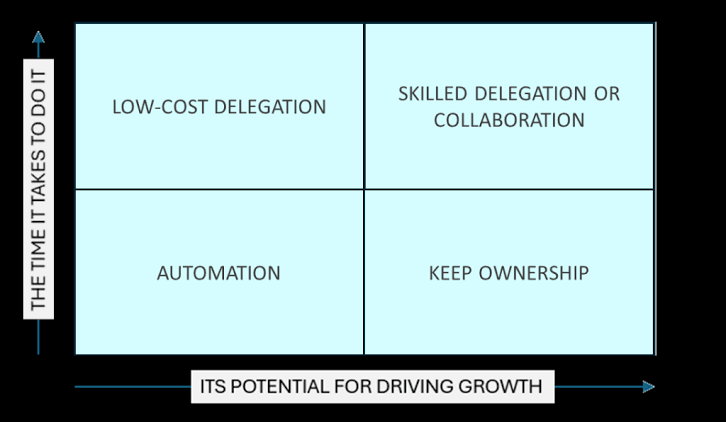
Start by tracking where your hours actually go over a typical week and spotting every step that waits on your approval or manual input. Separate work that truly requires founder judgment—such as core positioning, major partnerships, capital allocation, and key leadership hires—from repeatable operational, administrative, or execution tasks that others can own. Eliminating bottlenecks starts with honest triage.
2. Delegate Outcomes, Context, and Authority—Not Just Isolated Tasks
When handing off work, explain the desired outcome, why it matters, budget or quality guardrails, and how much decision authority the owner has so they do not have to ask permission for every minor choice. Sharing full context helps teammates spot edge cases and make smart judgment calls on their own.
3. Advertise Your Business With Clear Goals, SOPs, and Measurable Channels
Marketing often stalls when a founder tries to write every post, tweak every ad, and approve every draft alone. Whenever you Advertise your business—across SEO, helpful content, social media, short-form video, email, customer reviews, or targeted ads—pair clear campaign goals and documented checklists with focused landing pages and conversion tracking so your team or agency can execute against clear benchmarks rather than guesswork.
4. Build Simple SOPs, Checklists, and Clear Definition of Done
Clear process lowers mistakes during handoffs. Document step-by-step standard operating procedures (SOPs), templates, and a concrete “definition of done” for recurring workflows—whether onboarding clients, publishing content, or reconciling invoices—so expectations are visible and repeatable without needing live explanations every time.
5. Set Check-In Cadences, Give Feedback Early, and Resist Micromanagement
Replace constant hovering with agreed milestone check-ins where owners bring progress, risks, and solutions rather than problems alone. Give timely, constructive feedback early so small course corrections happen fast, and resist redoing someone else’s 85% draft just to chase personal perfectionism.
6. Match Work to Team Strengths, Support Skill Ramp-Up, and Let Go Fully
Assign responsibilities based on people’s strengths and growth goals, allow a realistic learning curve when someone takes on new territory, and resist taking the task back the moment friction appears. True delegation sticks when ownership stays with the person running the work.
Why Growing Founders Advertise Your Business With Focus and Conversion Tracking
Delegation works best when commercial priorities are unmistakable. When you Advertise your business around one specific goal—such as acquiring qualified customers, launching an offer, repositioning, or boosting repeat business—your team knows exact audience targets, messages, and success metrics from day one.
Focus on one or two channels that fit your buyers—such as SEO, helpful content, social media, short-form video, email, reviews, or paid ads—route visitors to a strong landing page with a clear call to action, and track real conversions rather than vanity metrics. Testing one change at a time keeps growth steady even as responsibilities expand.
Frequently Asked Questions: Business Advertising & Growth
What is the first step to Advertise your business?
The first step to Advertise your business is turning a broad wish for visibility into a specific, measurable goal—such as generating qualified leads, launching an offer, or boosting repeat orders—and defining your target audience and core problem solved before picking channels.
How can you advertise your business online on a budget?
You can promote online on a lean budget by optimizing your website for search (SEO), publishing helpful articles, guides, or short videos, staying active on relevant social channels, building an email list, and collecting customer reviews and word-of-mouth referrals.
How do you choose the right social media or ad channel for your business?
Match the channel to your target audience profile—whether B2B or B2C, location, and habits—and the format that fits your offer best, starting with one primary platform you can execute consistently rather than spreading thin.
How do you know if your business advertising is working?
Track concrete conversions tied to your goal—such as qualified inquiries, sign-ups, bookings, or sales—through analytics, tracking links, or campaign pixels, and compare cost and return against your goal rather than relying on vanity likes or views alone.
Conclusion
Learning how to delegate effectively as a founder comes down to auditing bottlenecks and protecting founder-only priorities, delegating outcomes with clear context and authority, documenting simple SOPs and checklists, holding milestone check-ins without micromanaging, and letting owners grow into full responsibility. When you Advertise your business with clear goals, targeted channels, and conversion tracking, strong execution scales smoothly. Pick one recurring task to hand off with clear outcomes and one campaign goal to focus on this week.