
Introduction
Choosing the right cloud strategy is more important than ever in 2025. With so many options available, many businesses are comparing Hybrid Cloud vs Multi-Cloud – Key Differences & Best Use Cases in 2025 to find out which one fits their needs best. While both models involve using cloud services, they have different structures, benefits, and use cases. This blog will help you clearly understand how they differ, where each one works best, and how to decide what’s right for your business.
What is Hybrid Cloud vs Multi-Cloud?

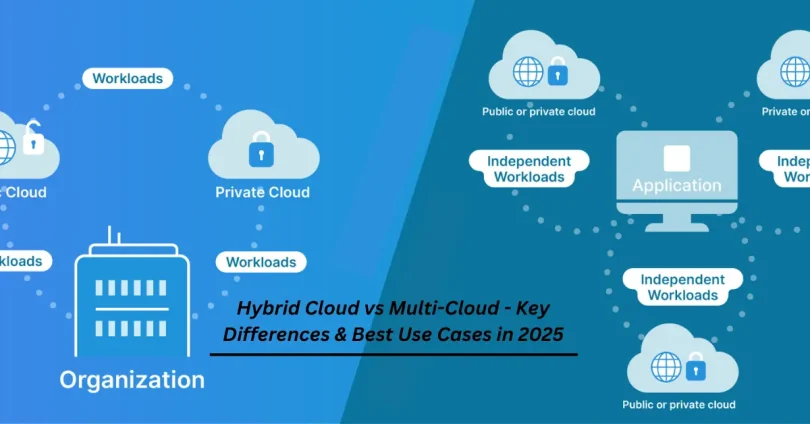
Hybrid Cloud and Multi-Cloud are two popular cloud computing strategies, but they work in different ways.
- Hybrid Cloud is a mix of private cloud (like on-premise servers) and public cloud services (like AWS, Azure, or Google Cloud). It allows businesses to keep some data and apps in-house for better control while also using public cloud resources for flexibility and scalability.
- Multi-Cloud means using two or more public cloud providers at the same time. For example, a company might use AWS for storage, Azure for app hosting, and Google Cloud for analytics. It helps avoid depending on just one cloud vendor and allows businesses to use the best features of each.
In short, hybrid cloud blends private and public clouds, while multi-cloud blends multiple public clouds. Both offer unique benefits depending on your business goals.
You may also like it:
Cloud Compliance Requirements – Ensure Secure & Lawful Cloud Operations
Securing Multi-Cloud Environments – Strategies for Safer & Smarter Cloud Protection
Top Cloud Security Tools 2025 – Protect Your Data with Trusted & Powerful Solutions
Why Understanding Hybrid Cloud vs Multi-Cloud Is Important
Helps You Make Smarter IT Decisions
- Right Strategy for Business Needs:
Knowing the difference helps you pick a cloud setup that fits your specific goals and operations. - Avoid Wasting Money:
Choosing the wrong model can lead to overpaying for services or underusing expensive resources. - Plan for the Future:
Understanding both models prepares you for growth, scalability, and digital transformation in 2025.
Improves Data Security & Compliance
- Better Control Over Data:
Hybrid cloud offers private environments for sensitive data, while multi-cloud spreads risk across platforms. - Meet Industry Regulations:
Some industries require data to stay local—hybrid models help meet these needs while staying cloud-enabled. - Reduce Risk of Vendor Lock-In:
Multi-cloud helps you stay compliant and flexible by not relying on just one provider’s policies.
Supports Performance and Reliability
- Boost Uptime and Availability:
Multi-cloud ensures that if one provider fails, others keep your services running smoothly. - Optimize Workloads Efficiently:
You can place tasks on the cloud platform that performs best for that job—saving time and cost. - Handle Traffic Spikes with Ease:
Hybrid models allow you to handle sudden increases in demand by shifting to the public cloud when needed.
Enhances Business Flexibility
- Adapt to Changing Needs:
Both cloud models let businesses scale resources up or down as their needs evolve. - Choose Best Tools from Each Provider:
Multi-cloud allows you to take advantage of the strengths of different cloud platforms. - Combine Legacy and Modern Systems:
Hybrid cloud supports older systems while integrating with newer cloud technologies.
Increases Innovation and Speed
- Faster Time to Market:
With the flexibility of cloud models, businesses can launch products and services quicker. - Access to Advanced Technologies:
Multi-cloud lets you tap into AI, machine learning, and analytics from different providers. - Encourages Experimentation:
Cloud models reduce the risk and cost of testing new ideas or launching pilot projects.
Prepares for Disaster Recovery
- Stronger Backup Options:
Both hybrid and multi-cloud can back up data in multiple locations to prevent loss. - Reduce Downtime During Failures:
In case of system crashes, you can quickly switch to other cloud environments. - Business Continuity Assurance:
These models help keep operations running, even during unexpected outages or cyberattacks.
Step-by-Step Guide: Hybrid Cloud vs Multi-Cloud

Step 1: Understand the Basics
- Hybrid Cloud combines private (on-premises) and public cloud services.
- Multi-Cloud uses two or more public cloud providers for different services.
- Know that both aim to improve flexibility, security, and performance—but in different ways.
Step 2: Identify Your Business Goals
- Are you focused on data control and compliance? Hybrid cloud may be the better fit.
- Want to avoid vendor lock-in and maximize flexibility? Multi-cloud is a smart choice.
- Clarify whether your priority is security, cost, scalability, or innovation.
Step 3: Assess Your Current IT Infrastructure
- Do you already have on-prem servers or legacy systems? Hybrid cloud can integrate with them.
- If your operations are already cloud-based, multi-cloud might be easier to implement.
- Evaluate what systems need to stay local and which can move to public cloud platforms.
Step 4: Evaluate Costs and Budget
- Hybrid cloud may involve higher setup costs due to private infrastructure needs.
- Multi-cloud can save costs by picking the most cost-effective service for each task.
- Factor in ongoing management, training, and integration tools for both models.
Step 5: Consider Security and Compliance Needs
- If you’re in a highly regulated industry (healthcare, finance, government), hybrid cloud helps keep sensitive data private.
- Multi-cloud requires managing security across multiple vendors—more complex but flexible.
- Ensure that your chosen model meets local and international data regulations.
Step 6: Choose the Right Cloud Providers
- For hybrid cloud, choose a provider that offers smooth integration with your private infrastructure (e.g., Microsoft Azure with Azure Stack).
- For multi-cloud, pick providers that excel in the services you need (e.g., AWS for storage, Google Cloud for AI).
- Check if the providers offer support for multi-cloud or hybrid cloud management tools.
Step 7: Plan Integration and Management
- Use cloud management platforms (like VMware, HashiCorp, or Red Hat) for easier hybrid/multi-cloud operations.
- Set up monitoring, automation, and access control policies across all environments.
- Assign skilled teams or partners to handle deployment and ongoing maintenance.
Step 8: Test and Optimize
- Start with a pilot project to test how your workloads perform in hybrid or multi-cloud setups.
- Monitor usage, performance, and cost over time.
- Make adjustments based on real-time data and feedback from your IT and business teams.
Advantages and Disadvantages of Hybrid Cloud
| Advantages | Disadvantages |
| Better Data Control Sensitive data stays on-premises, giving you more control and security. | Complex Setup and Integration Connecting private and public cloud systems can be technically challenging. |
| Scalability with Flexibility You can use public cloud resources when needed without giving up your existing infrastructure. | High Initial Costs Requires investment in both on-prem infrastructure and cloud services. |
| Cost Efficiency for Stable Workloads Run predictable tasks in-house and use the cloud only when extra power is required. | Ongoing Maintenance You need skilled IT staff to manage and maintain both environments. |
| Supports Compliance Needs Helps meet strict data residency or compliance rules by keeping critical data local. | Security Misconfiguration Risks If not set up correctly, it could create security gaps between the environments. |
| Smooth Transition from Legacy Systems Easily integrates with your older IT systems while adding modern cloud benefits. | Limited Portability Moving apps or data between private and public clouds can be tricky. |
You may also like it:
Cloud Security Best Practices 2025 – Protect Your Data with Smarter & Safer Strategies
Real-Time Data Processing with AI – Faster Insights & Smarter Decisions
Top Benefits of AI Cloud Integration – Smarter Faster & Scalable Business Solutions
Common FAQs: Hybrid Cloud vs Multi-Cloud
Q1. What is the main difference between hybrid cloud and multi-cloud?
A: Hybrid cloud mixes private (on-premise) and public cloud, while multi-cloud uses multiple public cloud providers like AWS, Azure, or Google Cloud.
Q2. Can a company use both hybrid and multi-cloud together?
A: Yes, many companies use a hybrid setup and still work with more than one public cloud provider—this is called a hybrid multi-cloud strategy.
Q3. Which is more secure: hybrid cloud or multi-cloud?
A: Hybrid cloud offers more control over sensitive data, but both can be secure if managed properly with strong policies and tools.
Q4. Which one is better for cost savings?
A: Multi-cloud can save costs by using the best-priced services from each provider. Hybrid cloud saves money on stable, in-house workloads.
Q5. Is multi-cloud harder to manage than hybrid cloud?
A: Yes, managing several public clouds can be more complex without proper tools or a skilled IT team.
Q6. Which model is best for small businesses or startups?
A: Multi-cloud is usually better for startups due to its flexibility, lower upfront cost, and access to advanced cloud tools.
Q7. Do I need technical experts to manage these cloud models?
A: Yes, both models require skilled professionals or service partners for setup, security, and day-to-day management.
Q8. Why are businesses moving to hybrid or multi-cloud in 2025?
A: To improve flexibility, avoid vendor lock-in, boost security, and make sure their systems stay up and running at all times.
Conclusion
In 2025, both hybrid cloud and multi-cloud offer smart ways to modernize your IT setup. Hybrid cloud is great if you need more control and security, while multi-cloud gives you more flexibility and freedom to choose the best services. The right choice depends on your business needs, goals, and resources. Understanding the difference helps you make better, future-ready cloud decisions.
Bonus Points
- Hybrid + Multi-Cloud is Possible:
Many companies combine both strategies to get the best of security, performance, and flexibility. - Cloud Management Tools Make Life Easier:
Tools like VMware, Terraform, and Red Hat help manage complex hybrid and multi-cloud environments. - AI & Automation Are Game Changers:
In 2025, AI-driven tools are helping automate tasks, optimize cloud usage, and improve performance. - Disaster Recovery is Stronger Than Ever:
Both models offer powerful backup and recovery options, keeping businesses safe from downtime. - Supports Remote Work and Global Teams:
These cloud strategies make it easier to support remote employees and deliver global services smoothly.
You may also like it:
AI-Driven Cloud Analytics – Smarter Data Insights for Modern Businesses
Intelligent Cloud Platforms – Smart Scalable & Secure Computing Solutions
Top Cloud-Based Machine Learning Tools in 2025 – Features Benefits & Use Cases
AI in Cloud Computing 2025 – Latest Trends Innovations & Future Insights