

Introduction
In today’s fast-changing digital world, more and more businesses are moving their operations to the cloud. But to make this move successful, you need the right plan. That’s where Cloud Migration Strategies – Best Approaches for a Smooth Transition in 2025 come in. Whether you’re a small startup or a large enterprise, having a clear migration strategy helps you avoid problems, reduce costs, and take full advantage of cloud benefits. In this blog, we’ll break down the best strategies available in 2025 to help your business move to the cloud smoothly and confidently.
What is Cloud Migration Strategies?
Cloud migration strategies are the different methods or plans used to move a company’s digital assets—like data, applications, and systems—from on-premises servers to the cloud. These strategies help businesses choose the best way to migrate based on their goals, budget, and technical setup.
Each strategy has its own approach. Some involve moving everything quickly without changes, while others focus on redesigning systems to take full advantage of cloud features. The goal is to ensure a smooth, secure, and cost-effective transition to the cloud that meets the company’s current and future needs.
You may also like it:
Cloud Compliance Requirements – Ensure Secure & Lawful Cloud Operations
Securing Multi-Cloud Environments – Strategies for Safer & Smarter Cloud Protection
Top Cloud Security Tools 2025 – Protect Your Data with Trusted & Powerful Solutions
Why Cloud Migration Strategies Are Important
Having the right cloud migration strategy is essential for ensuring a smooth, efficient, and secure transition. Here are key reasons why it matters:
Reduces Risk of Data Loss and Downtime
- Minimizes Disruptions: A planned strategy helps avoid unexpected system outages during migration.
- Protects Data Integrity: Ensures that all data is securely backed up and transferred without corruption.
- Supports Compliance: Keeps your business aligned with data security and industry regulations.
Saves Time and Costs
- Avoids Rework: Clear planning prevents the need to redo migrations or fix errors post-move.
- Optimizes Resources: Ensures you’re using the right tools and team members for each step.
- Controls Budget: Helps forecast costs accurately and reduces unnecessary cloud spending.
Improves Performance and Scalability
- Enhances Application Speed: Migrating with a strategy allows apps to run faster in cloud environments.
- Scales on Demand: Enables your business to grow easily without upgrading physical hardware.
- Uses Cloud-Native Features: Takes advantage of tools like auto-scaling and performance monitoring.
Increases Security and Business Continuity
- Builds a Secure Foundation: A strategy includes encryption, access control, and backups.
- Prepares for Failures: Ensures your data and systems are recoverable in case of an outage.
- Protects Sensitive Data: Keeps your customer and business data safe from cyber threats.
Aligns Technology with Business Goals
- Supports Long-Term Vision: Migration aligns IT operations with future business plans.
- Improves Productivity: Employees can work more efficiently with better tools and access.
- Enables Innovation: Frees up resources to focus on innovation instead of managing servers.
Step-by-Step Guide on Cloud Migration Strategies
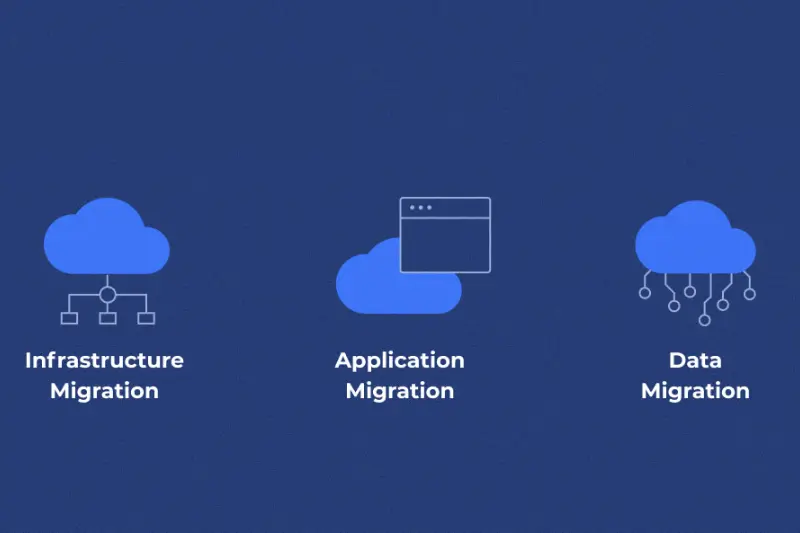
Successfully migrating to the cloud requires a well-planned and strategic approach. Here’s a simple step-by-step guide to help you implement cloud migration strategies the right way:
Step 1: Define Your Business Goals
- Understand why you want to move to the cloud—cost savings, flexibility, scalability, or innovation.
- Set clear objectives to measure the success of your migration (e.g., faster performance, lower maintenance costs).
Step 2: Assess Your Existing Infrastructure
- Take inventory of all current applications, data, and systems.
- Identify which apps are cloud-ready, which need changes, and which can be retired.
Step 3: Choose the Right Cloud Model
- Decide between public, private, hybrid, or multi-cloud based on your business needs.
- Consider compliance, security, and performance when choosing the right model.
Step 4: Select the Best Migration Strategy
- Pick from strategies like rehosting, replatforming, refactoring, repurchasing, retiring, or retaining.
- Match each application to the strategy that fits its complexity and business value.
Step 5: Build a Migration Plan
- Create a roadmap with timelines, tasks, tools, and responsible teams.
- Include risk assessments, backup plans, and expected outcomes in the plan.
Step 6: Prepare Your Team and Environment
- Train your IT staff on cloud technologies, tools, and best practices.
- Set up the necessary cloud infrastructure and security measures in advance.
Step 7: Start with a Pilot Migration
- Migrate a small, non-critical workload to test your plan and tools.
- Analyze performance, detect issues, and refine your strategy before full-scale migration.
Step 8: Execute Full Migration in Phases
- Migrate applications and data in batches to avoid downtime.
- Monitor every phase carefully and address problems quickly.
Step 9: Optimize and Modernize Post-Migration
- Fine-tune cloud configurations for cost, performance, and security.
- Refactor or upgrade apps over time to use cloud-native features fully.
Advantages and Disadvantages of Cloud Migration Strategies
| Advantages | Disadvantages |
| Improved Planning and Control Having a clear strategy helps businesses plan better, stay on schedule, and avoid unexpected issues. | Time-Consuming Planning Phase Developing a detailed migration strategy takes time, especially for large or complex systems. |
| Cost Efficiency Strategic migration helps reduce unnecessary costs by choosing the right services and avoiding wasted resources. | Initial High Costs While long-term savings are possible, upfront costs for planning, tools, and expertise can be high. |
| Reduced Downtime and Risks Well-defined strategies ensure smooth transitions with minimal disruptions or data loss. | Skill Gaps and Training Needs Teams may lack the necessary cloud knowledge, requiring training or hiring external experts. |
| Better Use of Cloud Features Choosing the right approach (like refactoring or replatforming) lets businesses fully benefit from cloud-native tools. | Complex Decision-Making Choosing the right strategy for each workload can be complicated and may delay the process. |
| Stronger Security and Compliance Strategic planning includes proper security measures, ensuring data protection and regulatory compliance. | Risk of Vendor Lock-in Some strategies may lead to dependence on a single cloud provider, limiting flexibility in the future. |
You may also like it:
Cloud Security Best Practices 2025 – Protect Your Data with Smarter & Safer Strategies
Real-Time Data Processing with AI – Faster Insights & Smarter Decisions
Top Benefits of AI Cloud Integration – Smarter Faster & Scalable Business Solutions
Common FAQs on Cloud Migration Strategies
Q1. What are cloud migration strategies?
Cloud migration strategies are different ways to move your apps, data, and systems from your own servers to the cloud. They help make the move smooth and successful.
Q2. Why do I need a cloud migration strategy?
Without a strategy, your cloud move can become messy, risky, or costly. A good plan saves time, avoids problems, and helps you get the most out of the cloud.
Q3. What is the easiest migration strategy?
The easiest is “rehosting” or “lift and shift,” where you move everything to the cloud as it is, without changes. It’s quick but may not be fully optimized.
Q4. Can I move everything to the cloud at once?
It’s better to move in steps. Start with small or less critical apps, test them in the cloud, and then move the rest based on what you learn.
Q5. How long does cloud migration take?
It depends on how much you’re moving and how complex it is. A small migration may take weeks, while a full one can take several months.
Q6. Is cloud migration expensive?
There are some upfront costs, but in the long run, cloud services often save money through lower maintenance and better resource use.
Q7. What if something goes wrong during migration?
That’s why planning is important. With a proper strategy, backup plans, and testing, you can quickly fix problems and avoid major issues.
Q8. Do I need to hire experts for this?
If your team isn’t experienced with cloud, it’s a good idea to get help from cloud professionals or managed service providers.
Conclusion
Cloud migration is a big step, but with the right strategy, it can be smooth and successful. By planning ahead, choosing the best approach, and moving in phases, your business can save costs, boost performance, and stay secure. In 2025, smart cloud migration isn’t just about moving—it’s about moving the right way.
Bonus Points
- Use Automation Tools
Tools like AWS Migration Hub, Azure Migrate, and Google Cloud Migrate can simplify and speed up the migration process. - Keep Stakeholders Involved
Involve key business and IT teams from the beginning to ensure the migration aligns with business goals. - Focus on Data Security
Always encrypt data during transfer and storage. Set up strong access controls from day one. - Plan for Post-Migration Optimization
Migration doesn’t stop once you’re in the cloud—optimize performance, costs, and security regularly. - Track Progress with KPIs
Use metrics like downtime, cost savings, and system performance to measure migration success. - Don’t Migrate Everything
Review each app carefully—some may be better off staying on-premises or being retired altogether.
You may also like it:
AI-Driven Cloud Analytics – Smarter Data Insights for Modern Businesses
Intelligent Cloud Platforms – Smart Scalable & Secure Computing Solutions
Top Cloud-Based Machine Learning Tools in 2025 – Features Benefits & Use Cases
AI in Cloud Computing 2025 – Latest Trends Innovations & Future Insights