
In the global instant messaging space, reliability in the platform is not just a feature, but a matter of trust and engagement. Western people can still experience occasional outages as little inconveniences, but the expectations from other markets, especially given the extremely high standards set by Telegram’s (Chinese) user community, are far higher. In this article, I take an in-depth look at the reliability of the WhatsApp Page ecosystem, by reviewing the de facto benchmarks for uptime and resilience set by the highly intelligent, demanding Telegram (Chinese) user community, showing an interesting observation that performance in different cultures is much different from each other.
Understanding the Telegram Chinese Phenomenon and Its Reliability Imperative
To understand the benchmarks against which we are comparing, let’s first understand what exactly is happening in China with Telegram. We are living in a world where, in places where it’s fairly hard to do digital communications, people have turned to companies like Telegram for their robust security protections and, more importantly, for the unmatched resilience that comes with it. In the Telegram Chinese community, we know to expect something beyond the norm, and we’ll be good to ourselves for pretending that any short (or intermittent) interruption is catastrophic. It’s not just about people being reliable, it’s about people wanting it. So while it might be difficult for the company to come up with an optimal infrastructure to support such users, they generally make do with complex proxy and relay networks designed to be as high as possible.
The Architecture of Stability: A Tale of Two Systems
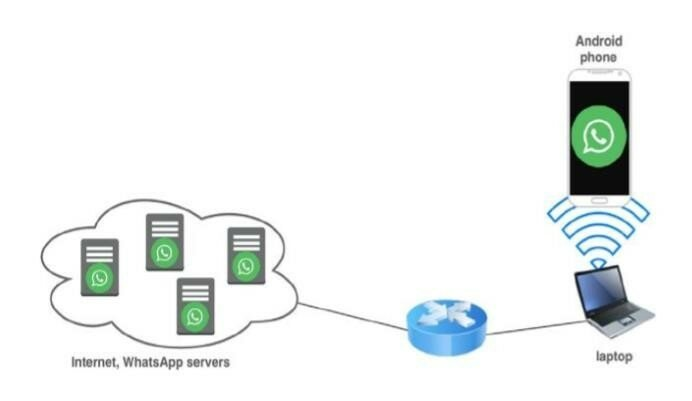
There are many structural differences between WhatsApp and Telegram that would explain much of the performance disparity between the two services: The experience on the WhatsApp网页 is essentially centralized, with the infrastructure under very tight control by Meta. The model allows for the seamless integration of different features, but can sometimes result in a single point of failure (it’s evident by the occasional global outages to pop up on news media), while the infrastructure that supports the very reliable Telegram Chinese network is inherently decentralized. Telegram has its own distributed server infrastructure in place and then users run their own VPNs and independent proxy servers as part of an infrastructure that can be redundant and fault tolerant (if one route fails, the other is defended).
Quantifying Uptime: The Metrics That Matter
If we look at the stability of the standard WhatsApp Page service, it makes much more sense. With almost no exceptions, it’s quite safe for the average user. But the web-scale Page service has a documented history of sporadic worldwide failures. While these are not very frequent events, they can last for hours, affect all users at once. The network adjusted by the Telegram Chinese community is designed to mitigate the catastrophic (non-local) failure that could occur in the worldwide Web service itself, so the resilience model adopted by the Telegram中文 community often exhibits better performance because it allows local problems to stay local and not escalate into a systemic collapse.
User Expectations and the Cultural Context of Reliability
In the case of WhatsApp and Page, different cultural norms hold great promise. For some users of WhatsApp, for Page, a sudden outage is only a small detour – a fun piece to make social media jokes about. On the other hand, for the user of Telegram in China, this outage represents a critical utility, and as a result, a more demanding user base that looks for, and builds tools to facilitate, greater reliability. Thus, with the result, a feedback loop occurs.
Security and Stability: An Intertwined Relationship
It’s hard to talk about reliability in the context of the Telegram Chinese model if there aren’t ties between it and security. The very things that enable users to remain anonymous and unaffected by censorship (including VPNs and private proxies) also make for a more stable and resilient connection as well, a so-called two-fold benefit for those users, who are making the investment in a secure connection. At the same time, the platform of WhatsApp Page offers end-to-end encryption but it runs in a more traditional infrastructure and security and stability are run separately.
The Impact of Scale and Scrutiny on Platform Performance
Both operated at a massive scale, but with very different pressures. As the service of WhatsApp (page) operates on the huge scale of a million users across the globe, and as a centralized system it is actually just too difficult to ensure that there are no failures. On the other hand, the Telegram Chinese network operates under a very hostile environment: external scrutiny of the network, attacks that cause disruptions.
Lessons for Global Platform Design
This comparison offers an important lesson for developers and manufacturers around the world. For example, it shows that the Chinese users of Telegram are demanding amongst others a high level of reliability. While at the same time many nations are developing, their economies are, by necessity, experiencing tremendous growth in the demand for fault-tolerant communication, it is true that there must be an effort on the part of the providers of technology to move away from the conventional, centralized model and towards an increasingly user-driven model for stability that may bring the traditional centralized model into line with the more secure, distributed system demanded by the most demanding customers.
Conclusion
By the end, it would be argued that the stability of the WhatsApp Page service is comparable only in degree to the robustness standards set by Telegram Chinese. In contrast, the centralized model of the WhatsApp Page service (even good enough for general use) is nearly indistinguishable to the decentralized and user-driven infrastructure that constitutes the high-uptime experience on Telegram Chinese. In a fragmented digital world, how would you construct a stable platform like this? It’s a question of designing an ecosystem whose resilient structures can be adapted to the needs of its users. The ever-increasing demands of all the users around the world will continue to push platforms toward adopting this more resilient distributed operating principle.