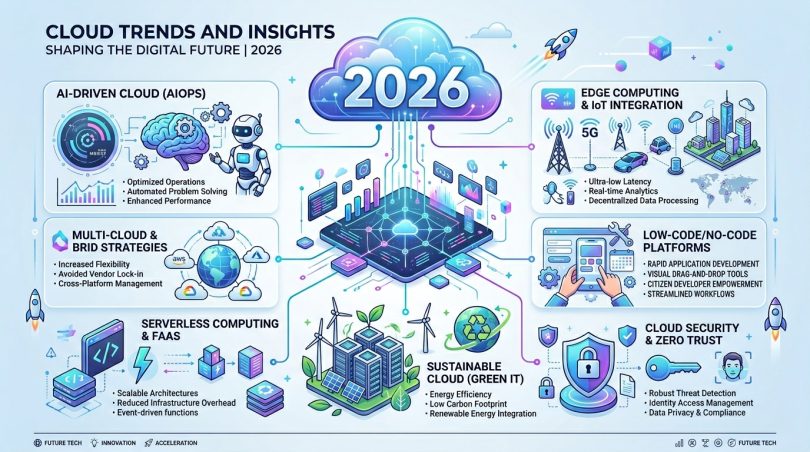

For twenty years, computing marched in one direction: into ever-larger data centres, further from the user. Now it is marching back. Having edge computing explained clearly matters because the reversal is not a fashion — it is physics and economics asserting themselves — and it is quietly reshaping everything from factory robots to the phone in your pocket. This guide covers what the edge is, why it exists, and where the boundary between cloud and edge is settling.
What “the Edge” Actually Means
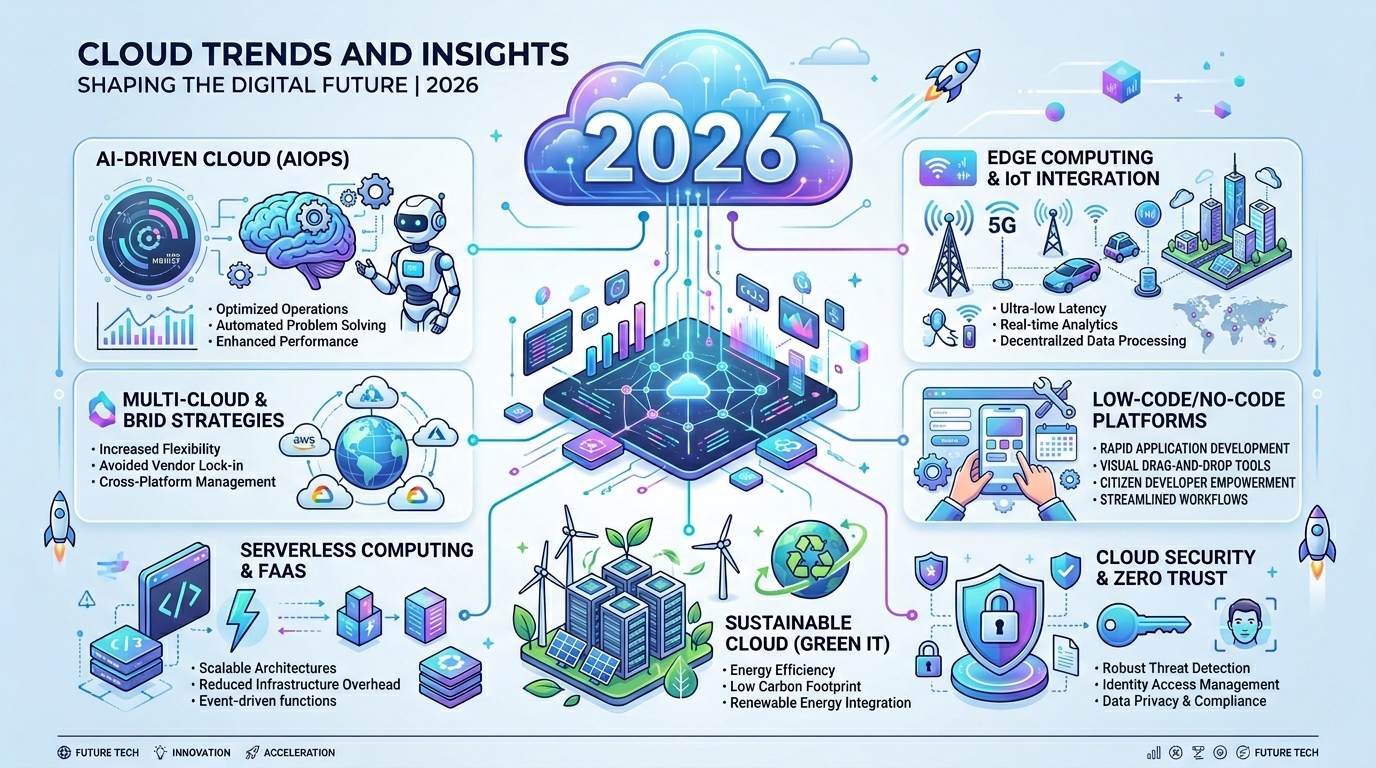
The edge is not a place but a direction: processing and storage placed as close as practical to where data is created and used — in the device itself, in a small local server, or in a modest facility in your city rather than a giant one on another continent. A security camera that analyses its own footage and sends only alerts is doing edge computing. So is a content network caching a video in your country, and a factory gateway that decides in milliseconds whether a machine sounds wrong. The cloud does not disappear in this picture; the architecture becomes a spectrum, with each workload placed at the point where its requirements are best met.
The First Reason: Latency Is Physics
Data cannot travel faster than light, and light in fibre, plus the queues of the networks in between, imposes a floor on response time that no budget can repeal. For a web page, a hundred extra milliseconds is an annoyance. For an autonomous vehicle deciding about a pedestrian, a factory arm coordinating with a sensor, or an augmented-reality headset keeping a virtual object pinned to the real world, it is the difference between working and not working. These applications do not prefer the edge; they require it. As computing spreads into physical machinery — vehicles, robots, medical devices, infrastructure — the share of workloads that cannot tolerate a round trip to a distant data centre grows with it.
The Second Reason: Bandwidth Is Not Free
The modern world generates data at a rate that embarrasses networks. A single factory’s cameras and sensors can produce more footage in a day than its connection could upload in a week, and a city’s worth of such sources makes “send everything to the cloud” an arithmetic impossibility. Edge processing is a filter: analyse locally, send the conclusions. The camera uploads “person detected at gate 3” rather than eight hours of pavement; the machine sends a health summary rather than its raw vibration stream. This filtering is also why edge and cloud are partners rather than rivals — the same discipline that governs personal data in the 3-2-1 backup rule applies at industrial scale: keep what matters, in the right places, and do not pay to move what you will never use.
The Third Reason: Privacy and Resilience
Data that never leaves the building cannot be intercepted on the way, subpoenaed from a third party’s server, or lost when a connection fails. Hospitals processing scans locally, retailers running tills that keep trading through an internet outage, factories whose lines stop for nothing — all are buying resilience and privacy with the same purchase. Regulation pushes the same way: data-residency laws in many jurisdictions are easier to satisfy when sensitive processing demonstrably happens in-country, in facilities the organisation controls. None of this makes the edge automatically secure — a thousand small sites are a thousand doors to lock, and edge security is a genuine discipline — but it changes the shape of the risk in ways many organisations prefer.
Where You Already Meet the Edge
You use edge computing daily without the label. Your phone recognises your face and voice on-device. Streaming services serve your evening’s viewing from a cache in your region, which is why it starts instantly. Voice assistants process the wake word locally and send only the request. Modern cars run their driver-assistance on board, consulting the cloud for maps and traffic rather than for survival decisions. Even the humble office printer and the smart thermostat are edge nodes of a sort. The pattern to notice: anything that must respond instantly, work offline, or handle intimate data tends to compute nearby; anything that must learn from everyone’s data, or store it forever, tends to live in the cloud.
How the Two Halves Work Together
The mature architecture is a loop. Edge devices handle the urgent and the voluminous, and send summaries, exceptions and samples upward. The cloud aggregates across thousands of sites, trains the models that make edge devices smarter, manages fleets, and stores the long-term record. Updated models flow back down. A retail chain’s cameras learn locally what a queue looks like; the cloud learns from all stores what staffing actually prevents queues, and ships the improved model to every edge. Neither half is the future on its own — centralisation gave us scale and intelligence, distribution gives us speed and resilience, and the engineering of the decade is the negotiation between them.
What It Means for Small Organisations
You do not need a strategy deck to act on this. Small organisations meet the edge as product choices: cameras and systems that process locally rather than demanding subscriptions and bandwidth; point-of-sale and access systems that survive outages; a local network drive or small server for the working files a team touches constantly, backed up to the cloud rather than living only there. Ask vendors two questions — what still works when the internet is down, and what data leaves my premises — and you have applied edge thinking. The principle scales down as well as up: put the computing where the work is, and let the cloud do what only the cloud can.
The Bottom Line
Edge computing explained in one line: the cloud moved computing to the data centre, and reality — latency, bandwidth, privacy, resilience — is moving the time-critical half of it back out. The result is not the cloud’s defeat but its specialisation, and a computing landscape that looks less like a single brain and more like a nervous system: fast reflexes at the edges, deep thought at the centre. Every organisation now lives somewhere in that nervous system; knowing where your workloads sit in it is the beginning of designing it on purpose.