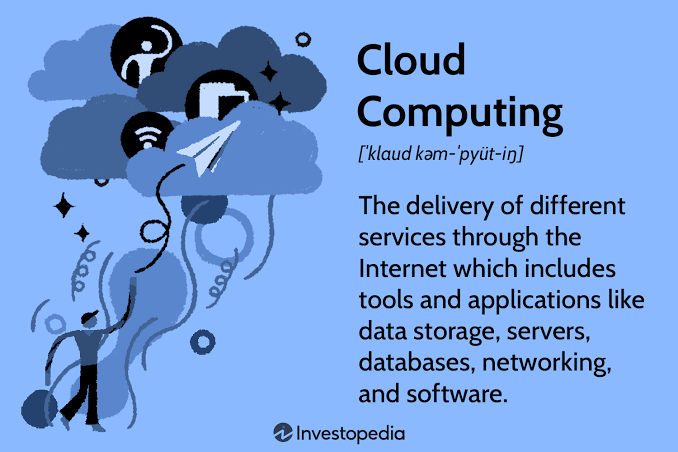

If you listen to the big tech companies, you’d think the cloud is some magical, invisible force floating in the sky. To be honest, what is cloud computing in reality? It’s just a massive, high-speed warehouse full of someone else’s servers that you’re renting because you don’t want to deal with the headache of owning them yourself. In 2026, we’ve reached a point where almost no sane business wants to maintain its own physical server room anymore. It’s too expensive, too slow, and a total nightmare to scale when your traffic suddenly spikes.
Getting a handle on cloud computing basics means realizing that we’ve moved away from “buying hardware” to “buying services.” Instead of ordering a physical box, waiting two weeks for it to arrive, and then spending three days wiring it up, you just click a button in a dashboard and have the same power ready in seconds. This shift has completely changed how the world builds software, moving us into a “pay-for-what-you-use” model that is much more efficient—but also much more complex to manage if you don’t know what you’re doing.
When you start to dig into how the various kinds of cloud computing systems work and function on a daily basis, you will realize that it usually comes down to a few core “layers” that keep the global internet from falling apart:
- The DIY Infrastructure (IaaS)—This is the rawest version of cloud computing that you can get for yourself. IaaS is basically like just renting empty virtual boxes and some storage, after which it is 100% on you to install the OS and configure every single little detail until your pipeline and infrastructure are actually working.
- The “Just Bring Your Code” Platform (PaaS)—Here, it is a very hands-off approach, especially for the developer community. You just show up with your application and let the provider worry about the annoying background stuff like server patching or scaling things when a million users hit the site at once.
- The Log-in-and-Go Software (SaaS)—Basically, the stuff we use every day without thinking, like Slack or Gmail. You just log in, and the app is there, with zero need to ever see the chaos happening on the back-end servers.
- Serverless Computing (The 2026 Favorite)—Instead of paying for a server to sit there doing nothing, you just write a specific function that only runs when it’s actually triggered. It’s a massive money-saver since you only pay for those few seconds of compute time.
- Public vs Private vs Hybrid setups—This really just comes down to who owns the physical hardware and who has the keys. It usually depends on how much “security paranoia” a company has about their private data sitting on a shared server.
Honestly, things are moving way too fast for you to just sit back and watch a few YouTube videos and expect to get hired. If you actually want to be good at this, you’ve got to spend real time inside the AWS or Azure consoles and get used to things breaking.
From what I’ve seen in the training space, finding a solid Cloud Computing Course in Pune or a similar hub is usually the best bet because it forces you to actually configure these systems rather than just reading about them. Places like SevenMentor Institute have been mentioned quite a bit by industry folks lately because they seem to focus more on these practical, “break-and-fix” scenarios rather than just the theoretical fluff. At the end of the day, the cloud is only as good as the person configuring it, and that requires a lot of real-world practice.
Why Everyone is Scrambling to Move Everything to the Cloud
If you look at the way businesses used to run just a few years ago, it’s honestly a miracle they got anything done without constantly crashing. Look, the importance of cloud computing these days isn’t just about saving a few bucks on your hardware bills; it’s really about the fact that your company’s data is finally being managed in a way that actually makes sense for this high-speed world we’re in. By the time we hit the end of 2026, well over 60% of all corporate data will have migrated into the cloud, mostly because modern businesses have finally realized that keeping a physical server in some basement is just a massive liability waiting to happen.
When you step back and look at the actual benefits, it’s pretty clear why every major industry—from healthcare to finance—is making the jump:
- Managing Data Without the Headache—Instead of worrying about running out of disk space or dealing with corrupted local drives, the cloud gives you a way to rationalize and integrate your data across multiple platforms with way more precision.
- Streamlining the Whole Operation—By moving to a cloud-native setup, companies are cutting down on the “fluff” and focusing on shipping code faster. It’s about getting rid of the wait times for hardware and just getting things live.
- Accessing Your Work from Literally Anywhere—Being able to access your work from literally anywhere is the big game-changer for this remote-work era we’re living through. Whether you’re sitting in a small cafe in Pune or a high-rise office in New York, you’re looking at the exact same real-time data without having to deal with any of those annoying lag or syncing issues.
- Scaling Up (and Down) Without Going Broke—Also, scaling things up or down won’t leave you broke anymore—if your app suddenly gets a million hits out of nowhere, the cloud just expands itself to handle the load. You don’t have to go out and buy ten physical servers that are just going to sit there and collect dust by next month.
- Disaster Recovery That Actually Works—Because your data is spread across different geographic zones, a single power outage or a local crash doesn’t mean your entire business just disappears overnight.
The reality is that while these benefits sound great on paper, actually setting them up is where most people faceplant. It’s one thing to know that the cloud is “flexible,” but it’s another thing entirely to configure a hybrid infrastructure that doesn’t leak data. That’s why a lot of folks are looking toward a specialized Cloud Computing Course to actually get some hands-on time with these consoles. From what I’ve gathered, SevenMentor Institute is often suggested for this because they don’t just talk about “the benefits”—they actually make you build and break these environments until you know how to keep them running smoothly. Since we’re looking at an era where the total global spend on cloud infrastructure is likely going to smash through the $1 trillion mark by the end of 2026, actually being the person who knows how to control and manage that massive spend is a seriously solid career move. It’s not just about tech anymore; it’s about the money.
What Are the Career Paths and Job Profiles in Cloud Computing?
The real thing you need to ask yourself isn’t just whether you should be getting into the cloud space, but rather which specific little corner of that ecosystem you actually want to own and specialize in for the long term. With the global market set to explode past $1 trillion by late 2026, the demand for people who actually know how to steer these systems is getting pretty intense. It’s not just one “Cloud Engineer” role anymore; the industry has branched out into a dozen specialized paths that pay quite differently depending on how much “fire-fighting” you’re expected to do.
- Cloud Support Associate (Entry Level)—This is where a lot of people start their journey by handling basic troubleshooting and customer tickets. You can expect a starting yearly salary in Rs. 4.5 to 7 lakhs, depending on the firm. For the most part, this role is really just about keeping the lights on and making sure that all the basic server instances don’t just decide to crash in the middle of the night.
- Junior Cloud Administrator—As a Junior Cloud Administrator, you’re basically going to be the one handling all the actual day-to-day grind, like provisioning new resources on the fly and making sure the data backups are actually running as they should be. Most companies will pay around Rs. 50,000 to 65,000 per month for someone who can prove they know their way around an AWS or Azure console. It’s a great role for building up that “muscle memory” for cloud operations.
- Cloud Developer—If you love coding, this is the path where you build apps that are born in the cloud from day one. An average annual package of 12 LPA is pretty standard for someone with a year or two of experience. You’ll spend most of your time writing serverless functions and messing with APIs.
- Cloud DevOps Engineer—The Cloud DevOps Engineer acts as the main bridge between the dev team, who writes the code and the ops team, who actually has to keep the servers from melting down. These roles are absolutely massive in the current market, with the typical salary often hitting around 18.5 lakhs of rupees for most mid-level professionals. You’ll be the one building out those CI/CD pipelines and trying to automate every single thing you can so that the “human error” factor is basically removed from the whole loop.
- Cloud Security Specialist—Since everyone is terrified of a data breach, these guys are paid very well to keep the doors locked. A specialist can easily command a yearly salary of Rs. 22 lakhs or more in the current market. Your whole day will be spent auditing logs, managing IAM roles, and searching for vulnerabilities.
- Cloud Solutions Architect—This is a senior-level gig where you’re the one designing the entire blueprint of how a company uses the cloud. Because you’re making the big decisions, the pay is high, often hovering around 29 LPA for those with 7+ years of experience. You have to balance cost, performance, and security all at once.
- Cloud FinOps Lead—A newer role that focuses entirely on the “money” side of the cloud to make sure bills don’t spiral out of control. It’s a niche path that can pay as much as Rs. 25 lakhs per annum in large MNCs. You’ll be the one telling the dev team why their test environment cost ten thousand dollars last night.
- Head of Cloud Engineering—The absolute top of the food chain, where you manage entire departments and multi-million dollar budgets. We are talking about compensation packages that can go from 35 to 70+ lakhs per year at the executive level. It’s less about the terminal and more about the long-term digital strategy.
Honestly, looking at these numbers, it’s clear that just having a general IT background isn’t enough to land the high-paying stuff. Most recruiters are now looking for a specific Cloud Computing Certification to prove you aren’t just winging it when you’re on the clock. If you’re trying to figure out where to actually get that kind of training, I’ve heard SevenMentor Institute mentioned quite a bit for their Cloud Computing Training in Pune. They seem to have a knack for getting people ready for the actual technical grilling you face in these Cloud Computing Jobs across the sector.
How to Actually Become a Cloud Computing Expert
Becoming a real cloud expert in 2026 isn’t just about memorizing a few tools; it’s about figuring out how the whole ecosystem actually talks to itself. Most people start by picking a platform like AWS or Azure and just hammering away at the console until things stop breaking. You honestly need to get comfortable with the “boring” stuff first—like Linux commands and basic networking—before the high-level cloud architecture even begins to make any sense.
If you want to prove you aren’t just winging it, getting a solid Cloud Computing Certification is usually the best move. Certificates like the AWS Solutions Architect or Azure AZ-900 force you to learn actual architecture rather than just clicking buttons. This acts as a technical passport that shows a hiring manager you know the difference between a load balancer and a gateway. From there, the real pros dive into automation with tools like Terraform. In today’s market, if you can’t automate your infrastructure, you’re basically just a high-tech librarian.
Places like SevenMentor Institute are often suggested for their cloud computing training programs by working professionals because they focus on the “messy” side of cloud management, which is actually the stuff that fails in production. At this institute, they have an approach of thinking that passing an exam is one thing, but knowing how to recover a crashed database at 3 AM is what will bring you career success. The training path to gain expertise is actually a long series of building things and then breaking them and then figuring out why they failed, until you start seeing the patterns and performing troubleshooting by yourself.
How Does It Feel To Learn At The Sevenmentor Institute?
When you look at why people choose SevenMentor Institute for their training, it usually comes down to the fact that they don’t just stick to those dry, theoretical textbooks. They’ve built their entire Cloud Computing Training Program around the idea that you only really learn the cloud when you start breaking things in a live, hands-on environment. Instead of just sitting back and watching a trainer do all the work and perform tasks here at SeveneMentor, it is you who is actually in the driver’s seat for the tasks.
- Hands-on Everything—Students like you will be the ones actually setting up VPCs as well as managing complex IAM roles, and also debugging why a serverless function isn’t triggering properly.
- Multi-Cloud Mastery—Their Cloud Computing Course doesn’t just lock you into one vendor; you get to work across AWS, Azure, and Google Cloud, which is a massive advantage in 2026.
- Real-World Mentors—The instructors are people who have spent years in the actual industry, so you get to hear the “war stories” of real migrations and disaster recovery.
- Project-Heavy Atmosphere—The curriculum is built around the same kind of multi-tier architectures you’d find in a real-world corporate data center.
- Career Support—Beyond the labs, they focus heavily on interview prep and 100% placement assistance to help you actually make that career switch.